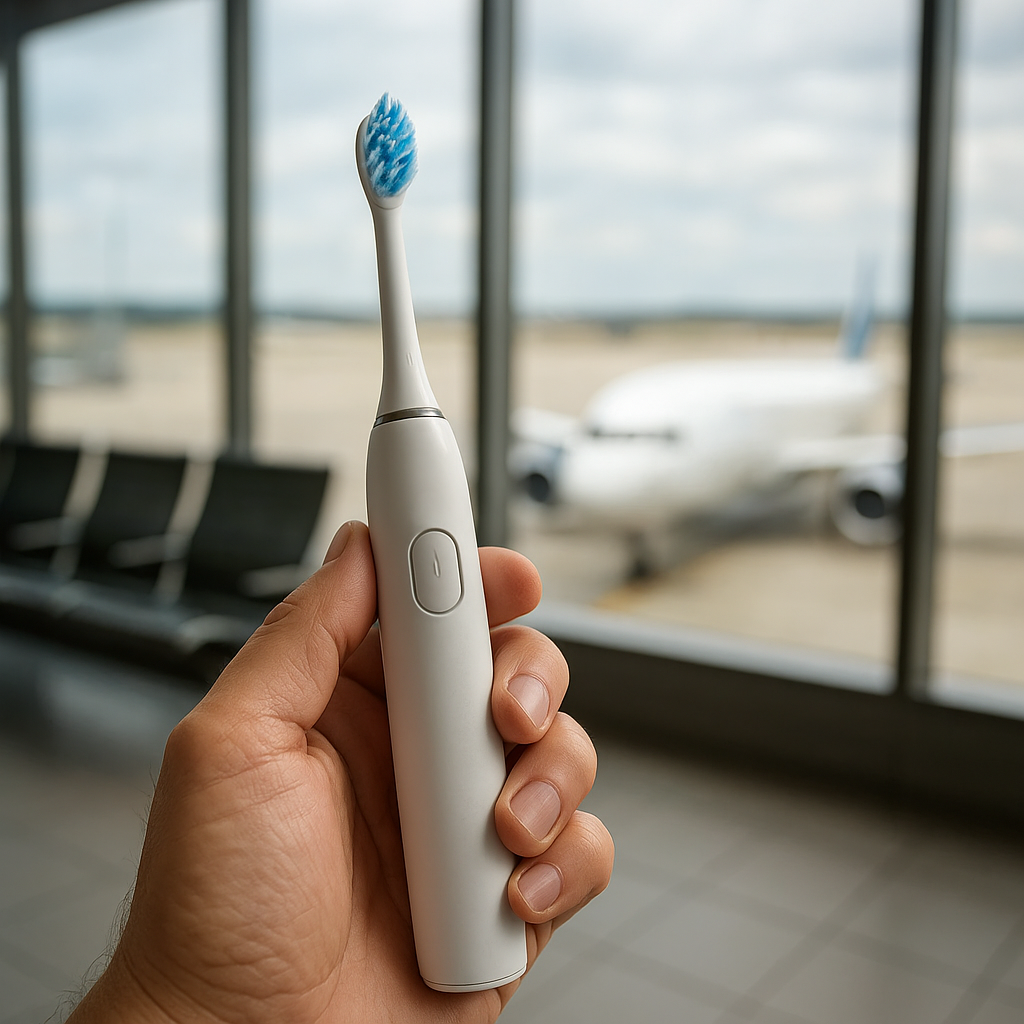
Yes, electric toothbrushes are allowed on airplanes under TSA rules. You can pack an electric toothbrush in your carry-on luggage or, subject to battery safety requirements, in checked baggage. However, toothbrushes with built-in lithium-ion batteries are best kept in your carry-on bag. Spare lithium batteries must travel in the aircraft cabin and cannot be placed in checked luggage. The exact requirements depend on the battery type and any additional restrictions imposed by your airline.
Can You Bring an Electric Toothbrush on a Plane?
The Transportation Security Administration (TSA) generally permits electric toothbrushes on flights departing from U.S. airports. However, battery-powered devices must also comply with Federal Aviation Administration (FAA) safety regulations.
Here is a quick overview of the rules:
| Toothbrush Type | Carry-On | Checked Baggage |
|---|---|---|
| Rechargeable toothbrush with lithium battery | Yes | Yes, with restrictions |
| Electric toothbrush with AA/AAA alkaline batteries | Yes | Yes |
| Toothbrush charging cable or standard adapter | Yes | Yes |
| Spare lithium batteries | Yes, with restrictions | No |
The TSA’s electronic toothbrush guidelines provide information about bringing these devices through airport security.
Airlines and international aviation authorities may apply additional restrictions, so checking your carrier’s policies before departure is recommended.
Can You Put an Electric Toothbrush in Checked Luggage?
Yes, an electric toothbrush can generally be packed in checked luggage, provided applicable battery safety requirements are met.
For toothbrushes containing lithium-ion batteries, the FAA recommends carry-on transportation because flight crews can respond more quickly to battery-related incidents in the cabin.
If you pack a permitted lithium-powered toothbrush in checked baggage, it must be completely powered off and protected against accidental activation and damage.
Toothbrushes powered by ordinary AA or AAA alkaline batteries are generally permitted in both carry-on and checked luggage.
However, spare or removed lithium batteries are prohibited in checked baggage. They must remain in your carry-on luggage, with their terminals protected against short circuits.
These requirements are explained in the FAA’s guidance on portable electronic devices containing batteries.
TSA Rules for Electric Toothbrush Batteries
The battery inside your toothbrush determines which transportation precautions apply.
Built-In Lithium-Ion Batteries
Many rechargeable electric toothbrushes contain integrated lithium-ion batteries.
These devices are generally permitted in carry-on bags and may be accepted in checked luggage if properly powered off and protected. Carry-on transportation remains the preferred option.
Replaceable AA or AAA Batteries
Electric toothbrushes that use standard alkaline batteries can generally travel in either type of baggage.
Batteries should be protected against damage and short circuits. If the toothbrush has a removable battery compartment, make sure it is securely closed.
Spare Lithium Batteries
Spare lithium-ion and lithium-metal batteries must be packed in carry-on luggage only.
Protect exposed terminals using individual battery cases, original packaging, or another suitable method that prevents contact with metal objects.
The FAA provides further information in its airline passenger battery safety guide.
How to Pack an Electric Toothbrush for Air Travel
Proper packing helps protect your toothbrush and prevents accidental activation during your journey.
- Turn off the toothbrush. Make sure the device is completely switched off before packing.
- Activate the travel lock. If your toothbrush has a travel lock feature, enable it to prevent accidental operation.
- Use a protective case. Store the toothbrush in a suitable travel case to protect the handle and brush head.
- Pack charging accessories. Keep the charging cable or standard wall adapter securely packed to prevent damage.
- Choose carry-on luggage when possible. This is especially recommended for toothbrushes with built-in lithium batteries.
- Check airline restrictions. Confirm any additional battery requirements before flying, particularly on international routes.
Remember that toothpaste is subject to separate TSA restrictions. In carry-on luggage, toothpaste containers must generally be no larger than 3.4 fluid ounces (100 milliliters) and comply with the liquids rule.
These restrictions apply to toothpaste, not to the electric toothbrush itself.
Overall, traveling with an electric toothbrush is straightforward. Both carry-on and checked baggage are generally permitted, but carrying lithium-powered toothbrushes in the cabin is the safer choice. Always pack the device securely, protect any spare batteries, and follow the applicable airline and FAA requirements.