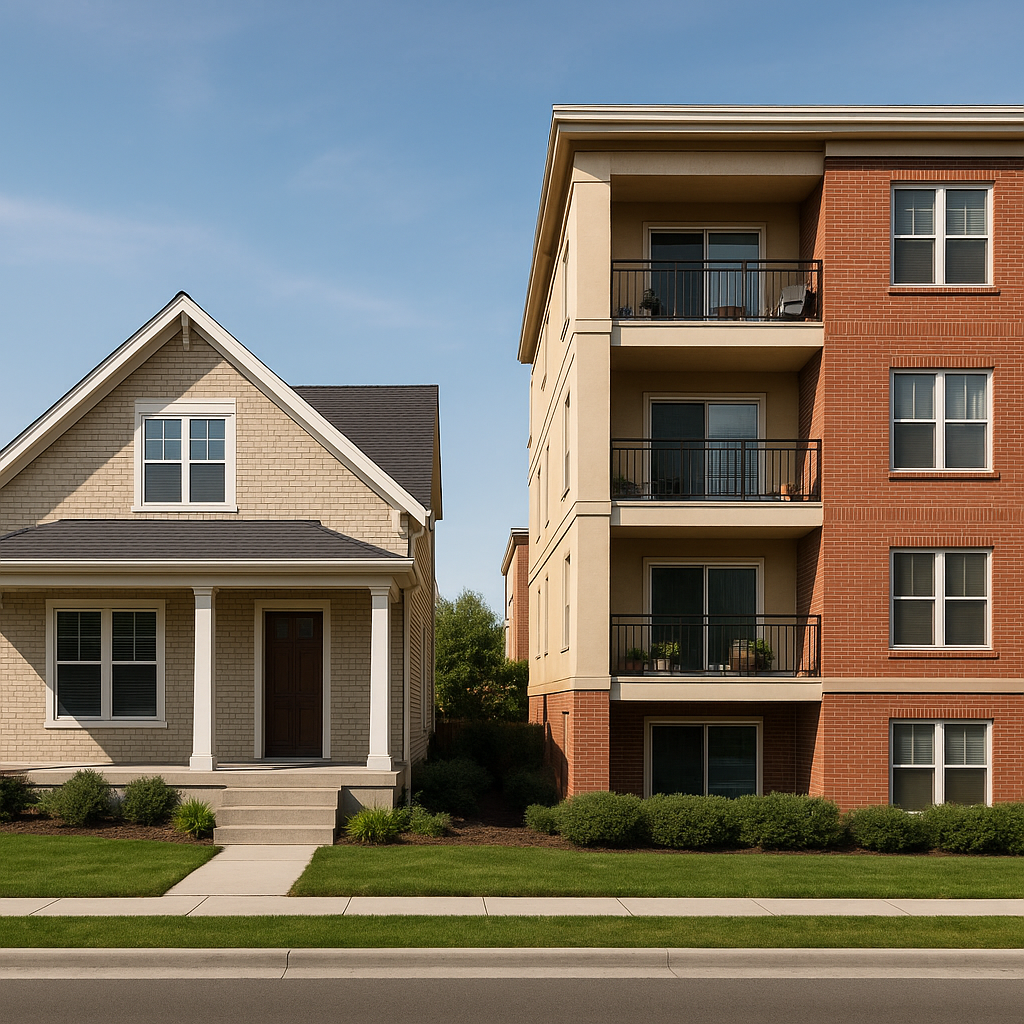
Renting an apartment is often better for people who want flexibility, lower upfront costs, and fewer maintenance responsibilities. Buying a house may be more suitable for those seeking long-term stability, additional living space, and the opportunity to build home equity. However, neither option is universally better. The right choice depends on your income, savings, local housing market, and how long you expect to stay in one place. This comparison focuses on buying a standalone house versus renting an apartment, although renting a house or purchasing a condominium are also possible alternatives.
Is It Better to Buy a House or Rent an Apartment?
Buying a house offers greater control over your living environment and the possibility of building wealth through homeownership. However, it also requires a substantial financial commitment and responsibility for repairs.
Renting an apartment generally involves fewer upfront expenses and allows greater flexibility when changing jobs or relocating.
According to the Consumer Financial Protection Bureau’s homebuying guidance, your financial stability and expected length of residence are important factors when deciding whether to rent or buy.
Buying a House vs. Renting an Apartment: Key Differences
| Factor | Buying a House | Renting an Apartment |
|---|---|---|
| Upfront costs | Down payment and closing costs | Security deposit and rental fees |
| Monthly payments | Mortgage and ownership expenses | Rent and applicable fees |
| Maintenance | Owner’s responsibility | Usually landlord’s responsibility |
| Flexibility | Selling or renting out takes time | Easier to relocate after the lease |
| Equity | Opportunity to build ownership equity | No ownership equity |
| Living space | Often more indoor and outdoor space | Usually less space |
| Customization | Greater freedom, subject to rules | Limited by lease terms |
These differences reflect typical arrangements. Actual costs, space, amenities, and responsibilities depend on the particular property and lease or ownership conditions.
Is It Cheaper to Rent an Apartment or Buy a House?
Comparing rent with a mortgage payment alone doesn’t reveal the full cost of housing. Homeownership and renting involve different initial and ongoing expenses.
Costs of Buying a House
Homebuyers should budget for:
- Down payment and closing costs.
- Monthly mortgage principal and interest.
- Property taxes and homeowners insurance.
- Mortgage insurance, if required.
- Maintenance, repairs, and unexpected replacements.
- Homeowners association fees, where applicable.
- Transaction expenses when eventually selling the property.
A 20% down payment is not universally required. Some mortgage programs allow smaller down payments, depending on borrower eligibility.
Part of each mortgage payment generally reduces the loan principal, increasing your ownership stake. Home equity is the property’s market value minus the outstanding mortgage balance and other debts secured by the home.
However, property values can decline, and ownership does not guarantee a financial profit.
Costs of Renting an Apartment
Renters typically need to consider:
- Monthly rent.
- Security deposits and applicable application or administrative fees.
- Renters insurance.
- Utilities and additional charges specified in the lease.
- Potential rent increases when renewing the lease.
Renting usually requires less initial cash than purchasing a house. Major building repairs are generally the landlord’s responsibility, subject to lease terms and applicable law.
Fannie Mae’s rent-versus-buy comparison outlines the different financial responsibilities involved in each option.
Pros and Cons of Buying a House
Advantages of buying a house include:
- Building equity: Mortgage principal payments can gradually increase ownership equity.
- Long-term stability: You are not dependent on a landlord renewing your lease.
- Customization: You can generally renovate and personalize your home, subject to regulations and HOA restrictions.
- More space: Detached houses often provide additional rooms, outdoor areas, and privacy.
- Potential appreciation: Your home’s market value may increase over time.
Disadvantages include:
- Higher initial expenses and ongoing ownership costs.
- Responsibility for maintenance and unexpected repairs.
- Less flexibility when relocating.
- Possible declines in property value.
Buying can be financially rewarding, but it is not automatically a better investment than renting.
Pros and Cons of Renting an Apartment
Advantages of renting an apartment include:
- Lower upfront costs: Renting generally requires less savings than purchasing a home.
- Flexibility: Relocating is often simpler after a lease expires.
- Less maintenance: Landlords typically handle major repairs.
- Community amenities: Some apartment complexes offer gyms, pools, and shared facilities.
- Location options: Renting may provide access to neighborhoods where homeownership is unaffordable.
Disadvantages include:
- No ownership equity from monthly rent payments.
- Potential rent increases and lease restrictions.
- Limited freedom to renovate or customize.
- Possible limitations on pets, space, and privacy.
Renting is not necessarily wasted money. It provides housing while allowing renters to preserve savings, invest elsewhere, or maintain flexibility.
Should You Get a House or an Apartment?
Buying a house may make more sense if:
- You have stable income and sufficient savings.
- You expect to remain in the same area for several years.
- You can afford mortgage payments and unexpected repairs.
- You need additional space or privacy.
- You’re comfortable managing property maintenance.
Renting an apartment may be better if:
- You expect to relocate or change jobs.
- You haven’t saved enough for homebuying expenses.
- You prefer fewer maintenance responsibilities.
- You want a smaller, easier-to-manage living space.
- Buying a comparable home in your area would be significantly more expensive.
Before deciding, use the Freddie Mac Rent vs. Buy Calculator to compare scenarios using local housing prices, rent, mortgage rates, ownership expenses, and your expected length of residence.
Ultimately, buying a house offers greater control and an opportunity to build equity, while renting an apartment provides flexibility and generally lower upfront costs. The better decision is the one that fits your budget, housing needs, and long-term plans.